Mia Forrest
-
 Mia ForrestOrchids, 20265 original 1/1 brass plates, housed in bespoke linen box
Each limited edition box includes 1 brass plate and its accompanying embossed edition.
Edition Information:
Brass plates are 1/1
Blind Embossed Works on Paper are 1/25 + 2 AP (Somerset Satin White 300gsm)Brass Plate | 20cm (W) x 30cm (H) x 0.63cm(D)
Blind Embossing [Work on Paper] | 25cm (W) x 35cm (H)
Box | 27.5cm (W) x 37.5cm (H) x 3cm (D) -
Mia ForrestWirrimbirra White (ed. 1/1), 2025Hand embroidery, silk thread, cotton cloth, 2-channel stereo audio,Artwork attached to cotton rag matboard,
encased in a Tasmanian Oak Frame,
Ultra vue glass
Ordinal inscription, .jpg
Sat #: #1976480000000000
Ordinals Inscription, hosted by gamma:
https://gamma.io/inscription/df494a6b29dd59a5a1012ca2567f15eb18a35ac869ca2ddc88fcaeb11a
5a327ei0
Artworks from the Stitching as Storage series explore how textiles can store, index, and arrange ecological data in meaningful ways. Wirrimbirra White is composed of 7,360 hand embroidered stitches on a grid-based cotton cloth canvas. Embedded within the geometric abstraction is a cryptographic aleatoric notation derived from the rhythmic biodata of the white waratah (Wirrimbirra White), a rare colour variant of the iconic red waratah. Belonging to the ancient Proteaceae family, the waratah traces its lineage back over 90 million years to the Gondwanan supercontinent. A primordial bloom, it embodies wisdom and perseverance due to its existence within and throughout deep time.
The white waratah is seldom seen in the wild. Similarly, its presence in the embroidery is subtle, nearly imperceptible. The delicacy of the faint stitching invites the viewer into an intimate act of looking - one that echoes the flower's rarity, fragility, and quiet persistence. To retrieve the biodata of plants, sensors are directly attached to the plant to record the changes in electrical conductivity that transpire through the stomata: a direct channel between the plants’ internal autonomous systems and the conditions of the external world. Each significant change within the stomata is communicated to the sensor, initiating the recording process. This biodata is then sonified and notated as a rhythmic composition, where each embroidered line signifies the duration of an 1/8th note, encoding the waratah’s biological rhythms into geometric harmony. The stitches articulate a rule-based compositional procedure that notates the “beat” of the plant. The choice of stitching with two color values nods to the most basic form of computer code: base-2, wherein two binary values are utilized to constitute conversation, or in this case, rhythmic notation.
The artwork is inscribed as an Ordinal to Satoshi #1976480000000000 (Oct 8, 2024 9:43 PM, 2024), a satoshi that was mined on the day the waratah biodata was originally obtained910mm x 930mm


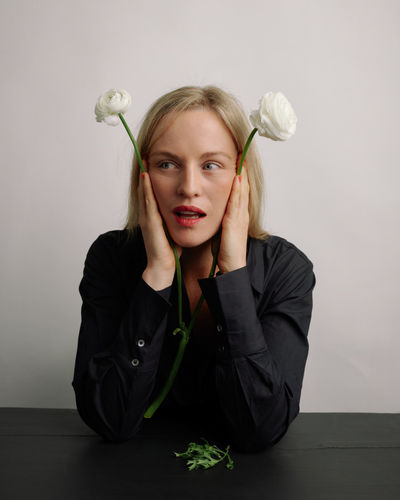
Mia is a multidisciplinary artist located in the Northern Rivers, Australia where she lives with her husband and three children on the edges of the Gondwanan rainforest, an ancient, world Heritage-listed ecosystem. With an enduring reverence for nature as muse, her work explores how natural phenomena and ecological systems can inform a methodology translated into visual, sonic, and generative forms, spanning across textiles, pigments, digital, and work on paper. Mia’s work hones in on the premise that art can be generative by nature - adopting ecological systems and rule-based processes as a collaborative framework. These ideas have become foundational to her practice, leading her to investigate intrinsic algorithms within ecological systems, adopting new ways of seeing and connecting to the natural world. During her emerging years, Mia’s work has been presented by Sotheby’s, Unit London, Phillips, Vellum LA, Tweed Regional Gallery (Australia), and participated at international art fairs including West Bund Art Fair (China) courtesy of Art Pharmacy. Her work is held in private and public facing commercial collections, including Spalter Digital (USA), Arab Bank (Switzerland), and the RF.C Art Collection (USA). Mia is one of five global recipients for the 2025 Leonardo.ai Imagination Fund, receiving US$10,000 to realize her project, Orchids. She has been recognized by the House of Fine Art X Phillips Digital Art Awards
(finalist, 2025), Ravenswood Women’s Art Prize (finalist, 2025), Arab Bank Switzerland Digital Art Prize (finalist, 2024), Waterhouse Natural Science Art Prize (finalist, 2026), and the Wollumbin Art Award at the Tweed Regional Gallery (Emerging Artist Award Recipient, 2022). Mia holds a Bachelor of Music (performance) from the Queensland
Conservatorium, and Masters in Film from Griffith Film School. Her video work is licensed for commercial and corporate spaces in the USA (Standard Vision) and Australia (Art Pharmacy).
